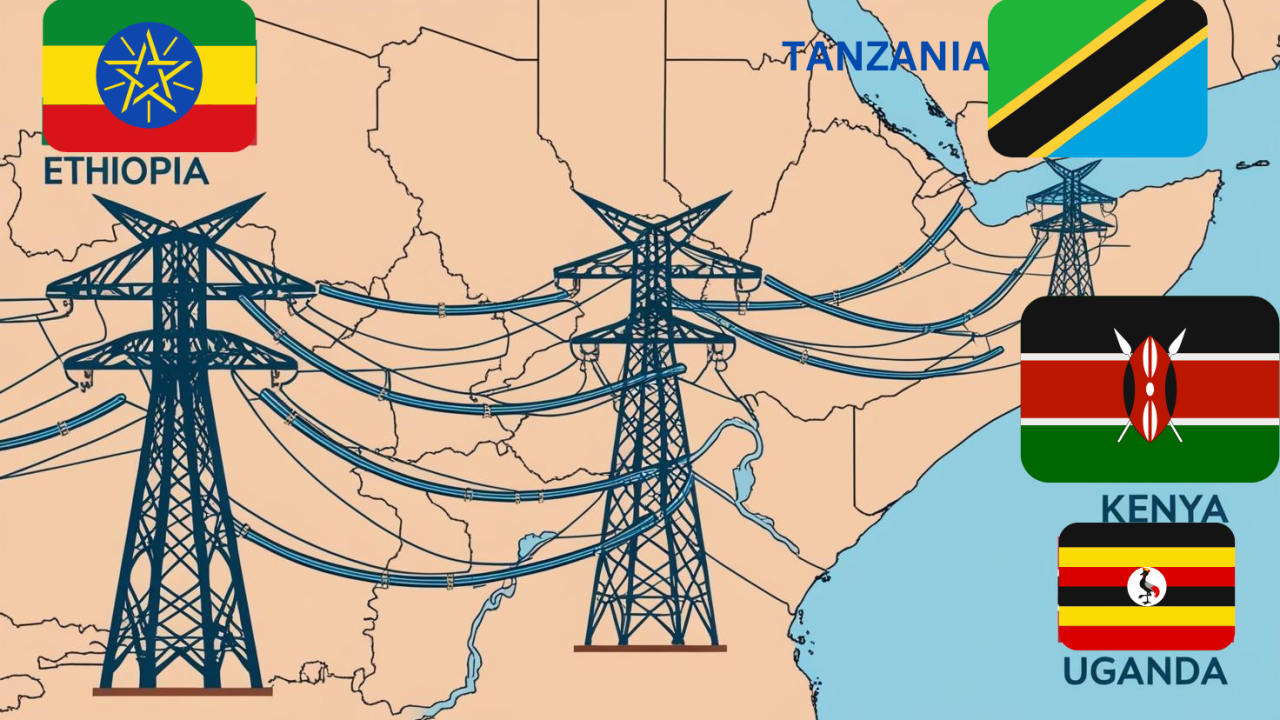
The East African power market is on the brink of transformation, with the Eastern Africa Power Pool (EAPP) set to launch a “Day-Ahead Market (DAM)” in early 2025. Since its inception in 2005, this initiative represents a significant step towards creating a competitive and integrated regional electricity market, crucial for enhancing energy security, reducing costs, and promoting sustainable development across the region.
Importance of the East African Power Market
1. Economic Growth: Access to reliable and affordable electricity is vital for economic productivity and development. The EAPP aims to provide improved access to energy, which can drive industrial growth, attract investments, and enhance living standards for the millions of people living without access to electricity. Energy is key to economic development, and better access through the regional power market is expected to improve economic productivity in the region.
2. Integration of Infrastructure: The competitive power market will integrate shared physical infrastructure with mechanisms for trading low-cost renewable energy sources. This integration is expected to deliver reliable, affordable, and sustainable electricity across the region, boosting economic productivity.
3. Renewable Energy Potential: East Africa has vast renewable energy resources, particularly hydropower, geothermal, solar, and wind. By leveraging these resources through a structured market, countries can optimize energy production and consumption while reducing reliance on fossil fuels.
4. Investment Attraction: A well-functioning power market can attract foreign direct investment (FDI) by providing a stable environment for energy trading. Investors are more likely to commit capital when they see a clear framework for electricity pricing and trading.
Lessons from the European Electricity Market
East Africa can learn valuable lessons from other regional electricity markets that acquired years of lived experience, such as the European electricity market’s evolution:
– Market Integration: The European Union has successfully integrated national markets into a cohesive framework that facilitates cross-border electricity trade. East Africa should prioritize building interconnections among member states to enable efficient energy exchange.
-Regulatory Frameworks: Establishing robust regulatory frameworks is essential for fostering competition and ensuring fair pricing. East African countries need to harmonize their regulations to facilitate seamless trade across borders.
-Investment in Infrastructure: Europe’s success in electricity trading is partly due to significant investments in infrastructure. East Africa must focus on developing transmission lines and interconnectors that allow surplus energy to flow from one country to another, thus balancing supply and demand effectively.
How East Africa Can Leverage Its Renewable Energy Potential
- Developing Interconnected Grids: The EAPP is working on interconnecting national grids to create a unified market. Projects like the Ethiopia-Kenya HVDC link are crucial for enabling cross-border power trade.
- Championing Regional Integration: By promoting the benefits of regional integration—such as lower costs, enhanced resilience, and accelerated renewable energy development—East Africa can create a more attractive environment for energy sector investment.
- Encouraging Private Sector Participation: By creating an enabling environment for private sector investment in renewable energy projects, East African countries can enhance generation capacity and diversify their energy mix.
- Implementing Smart Grid Technologies: Investing in smart grid technologies can improve efficiency in electricity distribution and consumption, allowing for better integration of renewable sources into the grid.
- Enhancing Regional Cooperation: Collaborative efforts among member states can lead to shared knowledge, best practices, and coordinated policies that support the development of a competitive power market.
In conclusion, the establishment of a regional power market in East Africa holds immense potential for transforming the energy landscape of the region. By learning from other regional markets such as EU experiences and capitalizing on its renewable energy resources, East Africa can create a sustainable, reliable, and cost-effective electricity supply that drives economic growth and improves quality of life for millions. Most importantly, stakeholders must work collaboratively to ensure that the foundations laid today will yield fruitful results for generations to come. The successful launch of the Day-Ahead Market will not only facilitate efficient resource allocation but also position East Africa as a leader in renewable energy utilization on the global stage.